
The Real Juggle: Soccer 2026
Lion StudiosSports
3.02.13K Reviews
- Version
- 1.13.18
- Installs
- 50.00M
- Age Rating
- Everyone
Screenshots
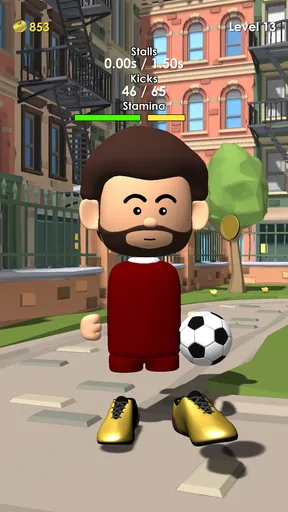
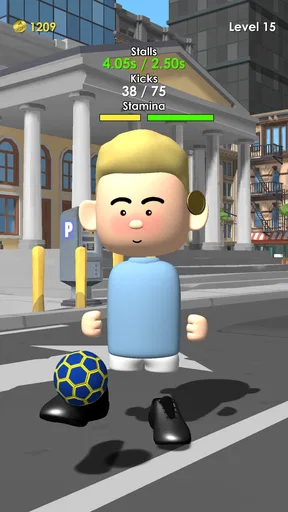
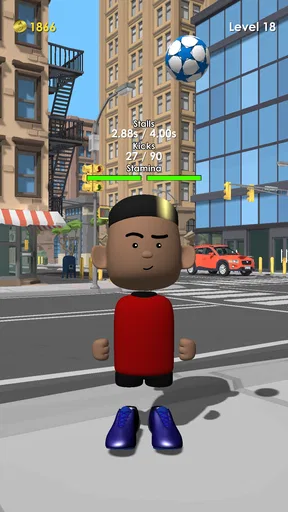
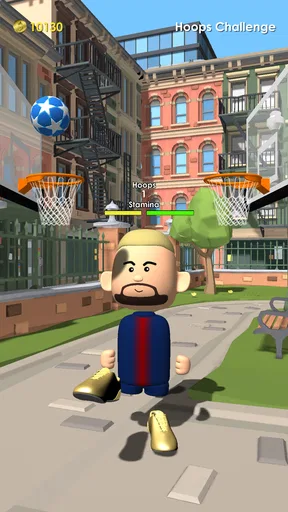
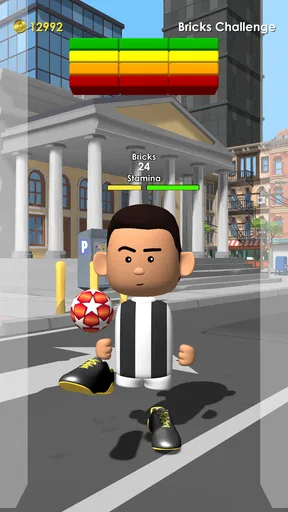
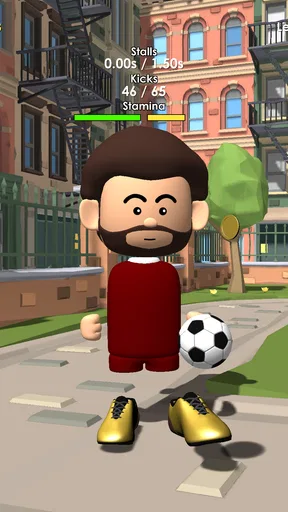
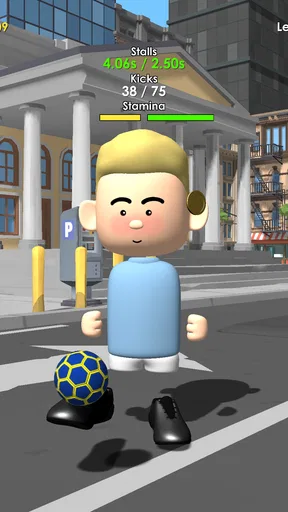
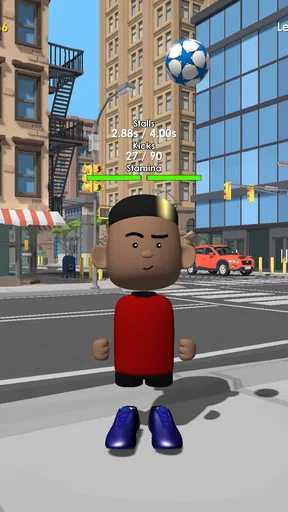
Our Review of The Real Juggle: Soccer 2026
 Analysis by Appyee
I went into The Real Juggle: Soccer 2026 expecting a quick football game built around flashy ball control, and that is exactly where it makes the strongest impression. This is not a full team-management simulation or a traditional match-based football game. It focuses on the satisfying skill of keeping the ball moving, building control through timing, and trying to make each attempt look cleaner than the last. My overall view is simple: it is an easy game to pick up, enjoyable in short bursts, and particularly good for players who like improving a small physical skill through repetition. It is less convincing if you want deep tactics, realistic matches, or a long-term sports career.
Lion Studios presents it as a free sports game, and the basic appeal is immediately understandable. You use simple touch controls to guide a football through freestyle movements, then try to maintain a rhythm without losing possession. The idea sounds small, but it creates a surprisingly focused challenge. A successful sequence feels earned because the game asks for attention rather than complicated button combinations.
The game has been available since March 14, 2019, and its continued visibility is reflected in more than 50 million installs. That reach also explains why it is easy to approach as a casual player: you do not need to know football formations, follow a club, or learn a large control scheme before starting. It is rated for Everyone, so it fits the kind of quick, accessible sports experience I could hand to a younger player or use when I only have a few spare minutes.
What makes the freestyle focus work
I find the freestyle focus works best when I treat each attempt as a small practice drill rather than a test of flair. In this section, I’ll look at how that focused loop shapes the game’s appeal and where patience matters more than chasing an impressive move. That distinction also helps clarify which kinds of football games may suit you better.
Small actions create a clear learning curve
The best part of the game is the relationship between input and result. When I first played, the temptation was to move too quickly and chase a spectacular sequence. That usually made control worse. The more reliable approach is to treat each touch as a separate decision: watch the ball, make a measured movement, and prepare for the next contact instead of reacting after it has already gone wrong.
That rhythm gives the game a useful layer of skill. The controls are approachable, but consistency takes practice. A new player can understand the goal almost immediately, while a more patient player can spend time refining timing and positioning. This is a better design choice than burying a simple freestyle idea beneath a large number of buttons.
One practical tip helped me more than simply playing faster: I started using shorter, calmer movements near the beginning of a run. Early success builds a stable rhythm, and that makes later actions easier to judge. Trying to show off immediately often turns a promising attempt into a needless mistake. The game rewards control before ambition, even if it does not explain that lesson in much detail.
A good fit for short sessions
The Real Juggle works particularly well when I want something active but not mentally heavy. I can play while waiting for an appointment, during a short break, or at the end of the day when a full football match would feel like too much commitment. Its central action is clear enough that I do not need to remember a complicated story or rebuild a strategy every time I return.
A realistic everyday use case is a ten-minute break from work or study. I can play a few attempts, notice that my timing is improving, and stop without feeling that I have abandoned a long match halfway through. That makes it more convenient than many conventional football games, where the fun depends on completing a full fixture or managing several layers of progression.
There is also a useful self-improvement loop here. Instead of measuring enjoyment only by whether I win, I can focus on keeping a sequence going for longer, recovering from an awkward touch, or making a difficult movement feel natural. Players who enjoy rhythm games, arcade sports, or score-chasing challenges may recognize that same “one more attempt” pull.
Where it differs from regular football games
Compared with a standard football game, this is much narrower and more physical. There is no need to think about passing lanes, defensive shape, substitutions, or the behavior of an entire team. That narrower design is its strength when I want immediate interaction, but it is also the reason it cannot replace a proper match simulator.
Traditional football games are better for players who want to control a team, build attacks, compete through structured matches, or make decisions away from the ball. The Real Juggle is better when the ball itself is the challenge. It asks whether I can maintain control, not whether I can read a defense or manage ninety minutes of play.
It also feels different from a pure endless runner. The focus is not simply on moving forward while avoiding obstacles. The satisfaction comes from the quality of each touch and the timing between actions. That gives it more deliberate control than many reflex-only games, although players who prefer constant variety may eventually find the central mechanic repetitive.
The most useful way to practice
I found that treating attempts as practice sessions rather than tests made the game more enjoyable. For example, I might spend several tries concentrating only on keeping the ball centered, then shift attention to smoother transitions. This approach is more effective than restarting emotionally after every mistake, because each failed attempt reveals something about timing or movement.
Another useful habit is to identify the moment when control begins to deteriorate. If I continue forcing the same pace after losing the rhythm, the next mistake is usually predictable. Slowing down, accepting a less impressive touch, and rebuilding control can be more valuable than trying to rescue the sequence with a risky movement. That is a small but meaningful trade-off: style is tempting, while stability is what usually extends a run.
Players using a phone with a smaller screen may also want to pay attention to how they hold the device. I had better control when my grip stayed relaxed and my active finger had room to move without covering the important part of the action. This is not a hidden mode or special setting; it is simply a practical adjustment that makes a touch-focused game feel less cramped.
Progression and the question of staying power
The game’s long-term appeal depends heavily on whether you enjoy repeating a core skill. I can see the attraction in gradually becoming more accurate, especially when a movement that once felt random starts to feel predictable. However, players who need frequent new systems, deep customization, or a strong competitive structure may reach the limits of the experience sooner.
That is the central trade-off. A focused design is easier to understand and more comfortable for casual play, but it has fewer places to hide repetition. The game cannot rely on team transfers, tactical experiments, or a large match schedule to refresh the experience. If the freestyle interaction itself stops feeling rewarding, there may not be enough variety to pull every player back.
My advice is to judge it by the pleasure of improving control, not by expectations borrowed from console football games. If a clean sequence gives you the same satisfaction as beating a personal best in an arcade challenge, the compact structure works in its favor. If you need a broad football world around the action, the limited scope will feel more noticeable.
Free access and the practical cost question
The game is free to download, which makes trying it straightforward. It also includes optional in-app purchases priced from $0.99 to $24.99 per item. I would approach those purchases carefully and first decide whether the basic freestyle loop is enjoyable on its own. A purchase should support a game I already like, not be the reason I keep playing a game that has not convinced me.
For a casual player, the sensible workflow is to install it, play several short sessions, and see whether the controls remain satisfying after the first novelty fades. That test matters more here than the size of the download or the popularity of the title. The game’s value comes from repeated interaction, so the important question is whether repetition feels like practice or like a chore.
I also would not recommend spending simply because a difficult sequence feels frustrating. Difficulty can make a successful attempt more rewarding, but it can also encourage impulsive decisions. Taking a break and returning with a calmer approach is often more useful than trying to solve every mistake through extra content or purchases.
Who should play it, and who should skip it
I would recommend this game to someone who wants a quick football-themed challenge without the demands of a full match. It suits players who enjoy touch control, timing, repetition, and visible personal improvement. It is also a reasonable choice for families looking for an accessible sports game, since its age rating is Everyone and its basic concept is easy to explain.
It is less suitable for someone searching for realistic football management, online team competition, detailed player statistics, or tactical decision-making. Those players would be better served by a conventional football simulator or a management game. The Real Juggle does not need to imitate those alternatives, but it should be chosen for what it actually emphasizes: individual freestyle control.
I would also hesitate to recommend it to players who dislike restarting after small errors. The game’s challenge is built around maintaining a sequence, so a missed touch can interrupt the entire attempt. That structure is satisfying for patient players and irritating for anyone who wants a more forgiving sports experience.
The current version is 1.13.9, and the listed minimum operating system is Android 8.0. That makes checking device compatibility worthwhile before downloading, particularly if the phone is older. On a compatible device, the main consideration is not learning complexity but whether the focused control loop matches your taste.
My final take after playing
My rating of the experience is mixed but favorable. The game understands its best idea and keeps returning to it: controlling a football through quick, precise freestyle actions. That clarity is a real strength. I never felt lost about what I was supposed to do, and short sessions could still feel meaningful because improvement was easy to notice.
At the same time, the narrow concept creates a firm ceiling. It does not offer the breadth of a team-based football game, and repetition may become the main weakness for players who need constant novelty. The average rating of 3.1 from around 88 thousand ratings suggests that the experience will not appeal equally to everyone, while roughly 2.1 thousand written reviews show that many players have taken the time to comment on it.
My recommendation is to treat it as a focused arcade freestyle game, not as a complete football simulator. Download it if you want a free, accessible way to practice timing and chase cleaner ball-control sequences. Skip it if your ideal football game involves full matches, tactics, or a deep career. For the right player, its simplicity is exactly what makes it enjoyable; for the wrong player, that same simplicity will be the first thing that wears thin.
In the end, I would keep it installed for short breaks rather than long playing sessions. It works best as a compact challenge that asks for concentration, rewards patience, and lets me put it down without losing a major story or match. That is not a limitation I would hide, but it is a clear identity—and when I approach it on those terms, the game delivers a pleasant little football skill test.
Privacy and Permissions
See what permissions an app requests and how it handles your data.
- Wi-Fi connection information
- view Wi-Fi connections
- Other
- view network connections, full network access, control vibration, prevent device from sleeping, Google Play license check
Verdict
Strengths of The Real Juggle: Soccer 2026
- Simple controls make it easy to start juggling quickly.
- Short challenges are ideal for quick gaming sessions.
- Smooth animations make tricks satisfying to perform.
- Progression encourages players to learn more advanced moves.
- Works well as a casual game for soccer fans.
Limitations of The Real Juggle: Soccer 2026
- Repetitive juggling tasks may become predictable over time.
- Some advanced tricks require precise timing and practice.
- Progress can feel slow without frequent play.
- Ads may interrupt the flow between challenges.
- The game offers limited depth beyond its core juggling mode.
Other Releases by Lion Studios
View All
Death Incoming!
Adventure4.5

The Superhero League 2
Puzzle4.6

Popsicle Stack
Arcade4.4

Hooked Inc: Fishing Games
Simulation4.6
Similar Picks in This Category
View All
8 Ball Pool
Miniclip.com4.8

Pooking - Billiards City
AIM TOP GAME TECHNOLOGY LIMITED - pool4.6

Carrom Pool: Disc Game
Miniclip.com4.4

EA SPORTS FC Soccer Mobile 26
ELECTRONIC ARTS4.6

World Soccer League
mobirix4.3

Soccer Cup 2026: Football Game
INLOGIC SPORTS - football tennis golf soccer4.3
Frequently Asked Questions
What is The Real Juggle: Soccer 2026?
The Real Juggle: Soccer 2026 is a casual soccer game focused on ball-juggling challenges rather than full traditional matches. Players control a footballer and try to keep the ball in the air, perform tricks, complete objectives, and improve their score. Its simple controls make it approachable for quick sessions, while progressively harder challenges provide extra difficulty for players who want to master advanced juggling combinations.
How do you play The Real Juggle: Soccer 2026?
Gameplay generally revolves around timing taps, swipes, or other touch gestures to control the ball and prevent it from hitting the ground. Each successful touch can help you continue a juggling sequence or perform a trick. The controls are easy to understand, but precision becomes increasingly important as the pace rises and challenges demand longer combos, better timing, and more accurate ball control.
Is The Real Juggle: Soccer 2026 free to download and play?
The game is typically available as a free download, allowing users to try its core juggling gameplay without paying upfront. However, free mobile games may include advertising, optional purchases, or other monetization features. Before downloading, it is worth checking the current store listing for details about in-app purchases, advertisements, supported devices, and whether an internet connection is needed for particular features.
Does The Real Juggle: Soccer 2026 require an internet connection?
The basic juggling experience may be playable without a constant internet connection, which makes the game suitable for short sessions while traveling or when mobile data is unavailable. Nevertheless, advertisements, updates, online rankings, account-related functions, or other connected features may require internet access. Availability can vary by version and device, so users should confirm the current requirements in the official app store listing.
Is The Real Juggle: Soccer 2026 suitable for children and casual players?
The Real Juggle: Soccer 2026 is generally easy for casual players to understand because its main objective is straightforward: keep the ball in the air and complete juggling challenges. It can also appeal to children who enjoy soccer-themed games, although parents should review the store age rating and privacy information first. Advertising, optional purchases, and gesture-based difficulty are important factors to consider before installation.
Play our best games!


